Accessibility & readiness
Live Captions for Hard of Hearing at Church — and When You Also Need Translation
Captions and translation solve different problems, but they run on the same technology. Here's how to think about both, recommended by hearing-loss charity Open Ears.

Live captions display the spoken service as text, in the same language it's spoken, for deaf and hard-of-hearing members — a different need from translation, though both use the same live speech-to-text technology. Breeze's Translation-Ready Captioning plan covers captions every week from $3, with translation available instantly if a guest also needs a different language.
Captions are not the same as translation
It's easy to conflate the two because they look similar on a screen: live text following the spoken word. Captioning transcribes what's said in the same language it's spoken in, for members who are deaf or hard of hearing. Translation converts what's said into a different language, for members or guests who don't share the room's main language. A church can need one, the other, or both in the same service.
Our friends at Open Ears, a charity with over fifty years' experience supporting people with hearing loss in Christian fellowships, specifically recommend live captioning in worship — not as a nice-to-have, but as a meaningful accessibility step many churches haven't yet taken.
It's worth saying too: captions help far more people than just those who are deaf or hard of hearing. Many people with diagnosed neurodiversities find captions make a spoken service easier to follow, and plenty of people with no hearing difficulty at all default to subtitles on TV for exactly the same reason — it's just easier to take in.
What live captioning looks like in practice
Captions can display on the listener's own phone — useful for anyone who wants to read at their own pace, in their own seat, without asking someone else to adjust a shared screen — or on a shared display at the front, useful when several people need captions and don't want to manage a phone during the service.
Breeze's Translation-Ready Captioning plan is built for churches whose primary need is captions rather than translation. It runs live captions every week, and if a guest occasionally needs the service translated into another language, that's available immediately, on the same link, without switching plans or tools. Spoken audio translation is also available if a listener would rather hear it than read it.
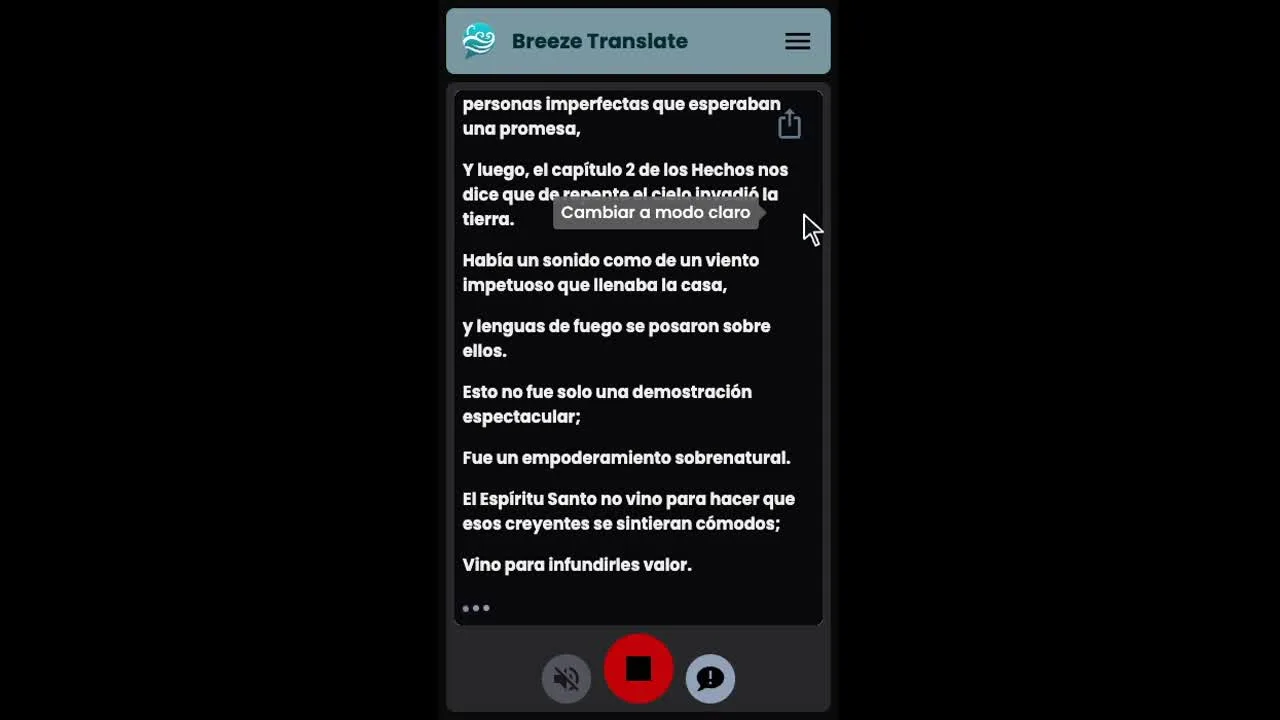
Captions and translation, side by side
Because both features run on the same underlying live transcription, a church doesn't have to choose one permanently. A member who is hard of hearing can read captions in the church's main language — the language spoken at the front — while a guest two seats along reads the same moment translated into Portuguese, from the same live feed, at the same time, with no extra setup on the day.
Choosing between plans
- If captions for hard-of-hearing members are the main, weekly need: Translation-Ready Captioning fits, with translation available on demand
- If translating for guests in other languages happens most weeks: a Translation plan (Basic, Abundant Sundays, or Abundant All Week) fits better, and includes captioning as part of the same experience
- Either way, there's no separate app or hardware — listeners use the same link or QR code regardless of whether they need captions, translation, or both
Not sure whether captions or a translation plan fits your church better?
See the full plan breakdown and prices →Frequently asked questions
Make captions part of every service
Try live captioning free this Sunday, with translation ready the moment a guest needs it.