Welcome & accessibility
Can Older Church Members Use Live Translation on Their Phones?
Usually, yes — with the right first experience. This isn't about training everyone on new technology; it's about one warm, patient hand at the door.
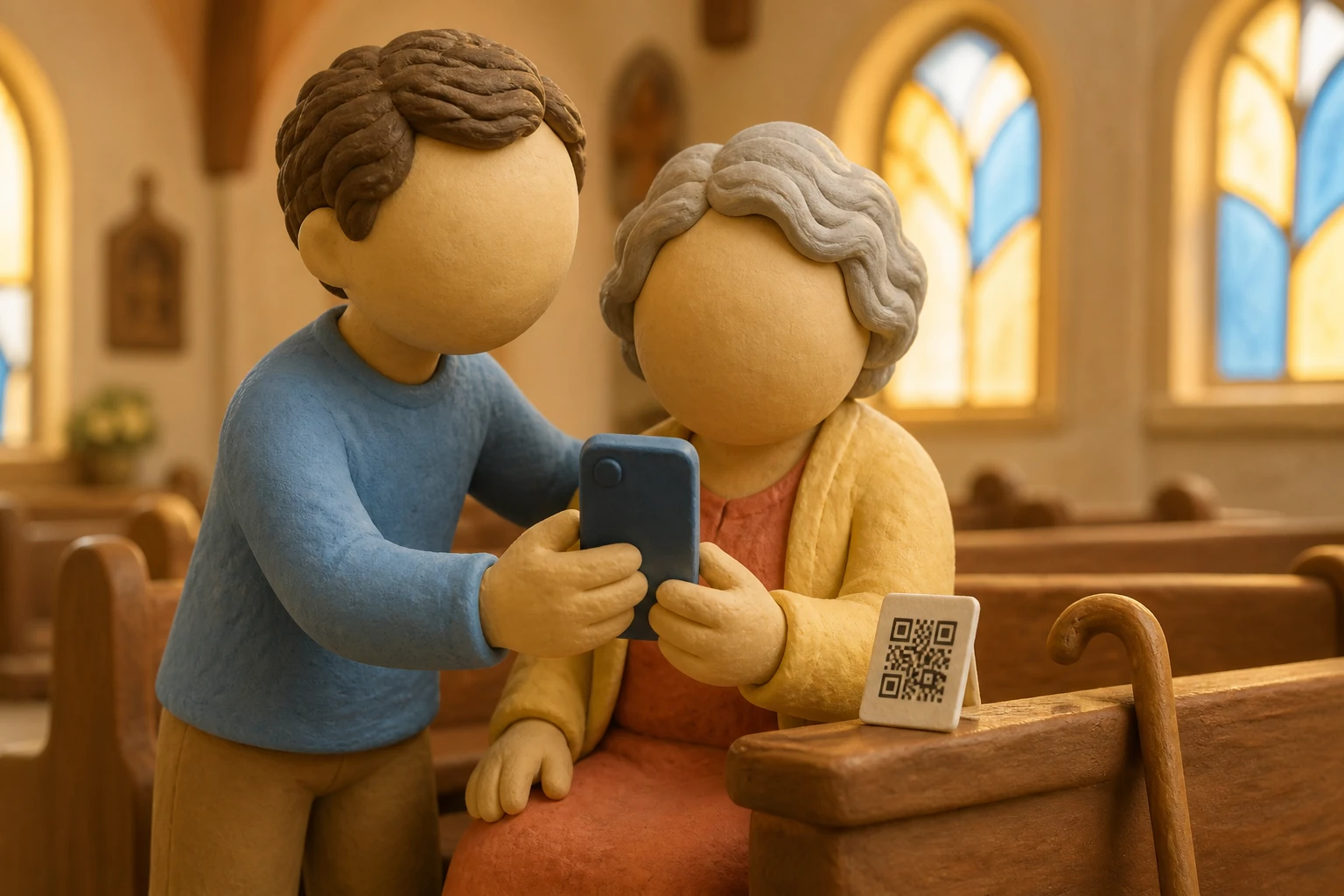
Scanning a QR code and reading large text on a phone is well within reach for most older members and guests, especially with one person briefly showing them the first time. A volunteer greeter at the door for the first few weeks solves most of the hesitation — not a training session, not printed instructions, just a warm hand the first time.
The real barrier usually isn't ability
It's easy to assume older members will struggle with a QR code, but the more common barrier is hesitation, not ability — not wanting to hold up the queue, not being sure they're doing it right, or simply not having tried a QR code before this exact moment. Once someone has done it once, successfully, with a bit of encouragement, most don't think twice about it the following week.
The dignified approach treats this as a one-time moment of help, not an ongoing accommodation. A member who needed a hand scanning the code on their first Sunday is usually doing it independently by their third.
What actually helps, in order of impact
What works
- A warm, patient greeter at the door for the first few weeks, ready to help anyone who looks unsure — not singled out by age, just genuinely available
- Large, readable text by default on the listener screen, which most people notice and appreciate without being told it's an accessibility feature
- A brief, friendly mention from the front ("if you'd like translation or captions, look for the QR code at the door") rather than relying purely on a sign
- Patience the first time — most hesitation disappears entirely after one successful use
What to avoid
Avoid framing this as a training programme or a separate accessibility track for older members specifically — it tends to draw more attention to the perceived difficulty than the technology itself warrants, and can feel patronising rather than welcoming. The goal is one calm, unhurried moment of help, offered the same way to anyone who looks unsure, regardless of age.
It's also worth not over-explaining on the day. "Scan this, then choose your language" is usually enough; a long verbal explanation of QR codes in general tends to create more anxiety than it resolves.
If someone genuinely doesn't have a smartphone, jumping straight to FM or infrared receivers isn't usually the first answer — many churches keep a small stock of loaner devices instead, old phones or tablets donated when members upgraded, kept charged and ready to hand to a guest who needs one.
If some members would rather read large captions than use translation at all.
Live captions for hard of hearing at church →It's not just an age question
The same warm-hand approach helps anyone unfamiliar with QR codes, regardless of age — a first-time guest of any generation, someone without a data plan who needs to use venue Wi‑Fi, or simply someone in a hurry who didn't read the sign. Treating this as a general welcome practice, rather than an age-specific accommodation, tends to land better for everyone involved.
Frequently asked questions
See how simple the first scan really is
Try Breeze free this Sunday and watch how quickly guests of any age pick it up.